


An initiative of the Bamboo Society of Australia
Bamboo Breakthrough
The Next Frontier 2026–2035
A ten-year roadmap to establish a domestic structural engineered bamboo industry, from plantations and processing through advanced manufacturing to construction.
The opportunity at a glance
The opportunity by 2035
Independent economic modelling by Deloitte Access Economics sets out the potential scale of a domestic engineered bamboo industry. The figures below are from the high-growth scenario for 2035.
Annual market value
Contribution to GDP
Additional jobs
Annual engineered bamboo production
Material produced each year
Avoided in 2035, high-growth scenario
Why engineered bamboo?
Grown as a crop. Engineered for construction.
Bamboo has a 5–7 year growth cycle. Once established, mature culms can be selectively harvested each year without replanting or clear-felling, leaving the root system intact. New culms regenerate from the rhizome, allowing continuous production.
Once processed, bamboo can be engineered into beams, panels, flooring, cladding and other building products. Structural engineered bamboo is already used internationally in residential, commercial and public infrastructure projects.
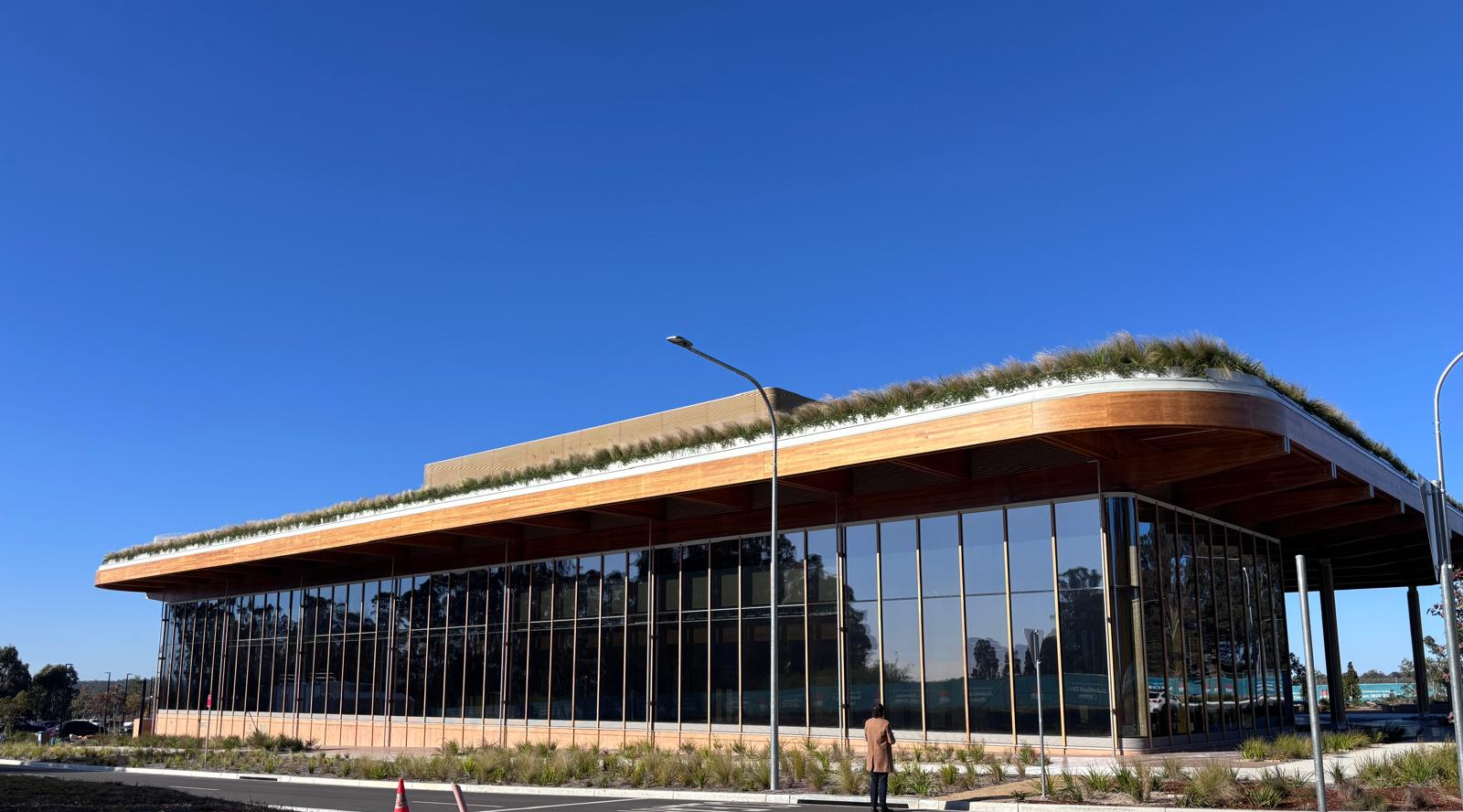
The First Building, Bradfield City designed by Hassel. Bamboo battens and flooring.
The ten-year pathway
Five phases, 2026 to 2035
The roadmap sets out a phased path from feasibility studies and pilot projects through technology, certification and first domestic harvests to commercialisation and industry expansion.
Foundations & Feasibility
2026–2028Feasibility studies, initial funding, stakeholder engagement and pilot plantations.
Phase 2Technology Integration
2028–2029Adapted equipment for early plantations, small-scale processing, AI and drone trials.
Phase 3Market & Operational Scaling
2030–2031Housing pilots, certification pathways and supply chain development.
Phase 4Harvest & Commercialisation
2032–2033First domestic harvests, regional jobs and construction roll-out.
Phase 5Expansion & Innovation
2034–2035Scaling plantations, processing, exports and carbon-linked revenue.
Six workstreams
Six areas have to move together
The roadmap groups the work into six connected priorities, each with recommendations and milestones across the five phases.
Investment & Market Development
Securing funding and establishing market channels for engineered bamboo in Australia.
Open workstream → 02Standards, Testing & Certification
Building the standards, testing and certification pathways that allow engineered bamboo into Australian buildings.
Open workstream → 03Policy, Advocacy & Stakeholder Engagement
Closing the policy gap and building the coalition needed for a new bio-based material.
Open workstream → 04Research, Innovation & Technology Development
Improving productivity, reducing cost and expanding the commercial applications of engineered bamboo.
Open workstream → 05Planting, Harvesting & Processing
Plantations on degraded and transitioning agricultural land, regenerative harvesting and regional processing capability.
Open workstream → 06Carbon Recognition
Recognition of bamboo's sequestration in Australia's carbon accounting frameworks.
Open workstream →Search the Bamboo Breakthrough
What do you want to know about?
Search runs across the public content of this website. Access to the underlying Deloitte Access Economics research is curated by the Bamboo Society of Australia.

Get involved
The roadmap is in front of us. Now we need people to help make it happen.
Growers, processors, manufacturers, architects, engineers, researchers, investors, government, standards bodies and community partners all have a role to play. If you or your organisation can contribute expertise, investment, technology, projects or partnerships, we want to hear from you.
Stay updated on the roadmap
Get notified as we hit key milestones — from feasibility studies through to first domestic harvests.

Bamboo Breakthrough is an initiative of the Bamboo Society of Australia. Established in 1998, the BSA is the national voice for Australia's bamboo industry. Visit bamboo.org.au ↗